What happens when children are invited to encounter their everyday surroundings not as a familiar background, but as something to look at, listen to, explore and transform?
During the ART-ECO workshops in Trondheim, schoolchildren explored their surroundings through different artistic practices. Cameras, sounds, movement, found objects, instruments and imagination became ways of encountering what was already there. Across the workshops, the school and its surroundings gradually became more than the setting for learning: they became part of the artistic process itself.
Looking differently
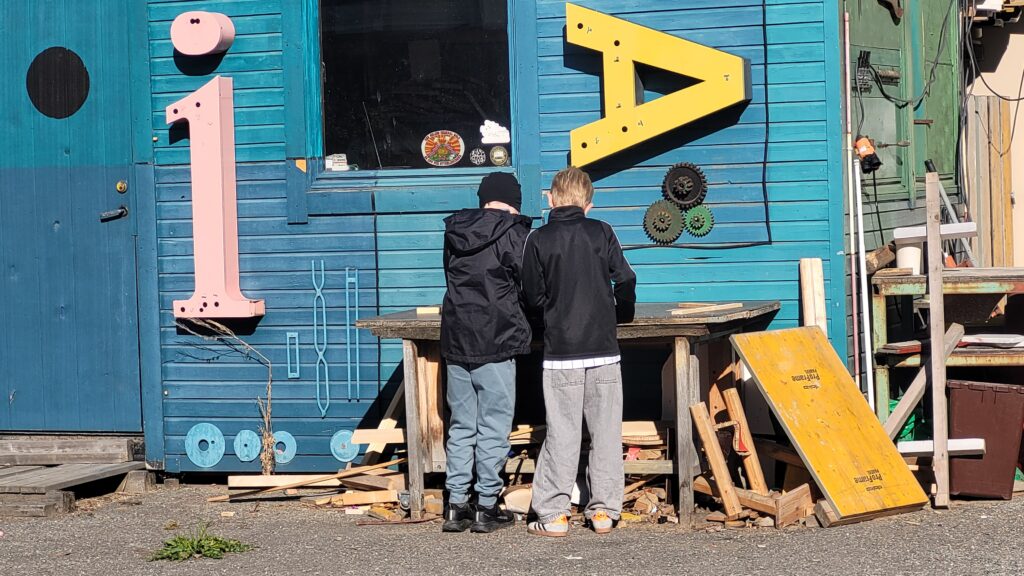
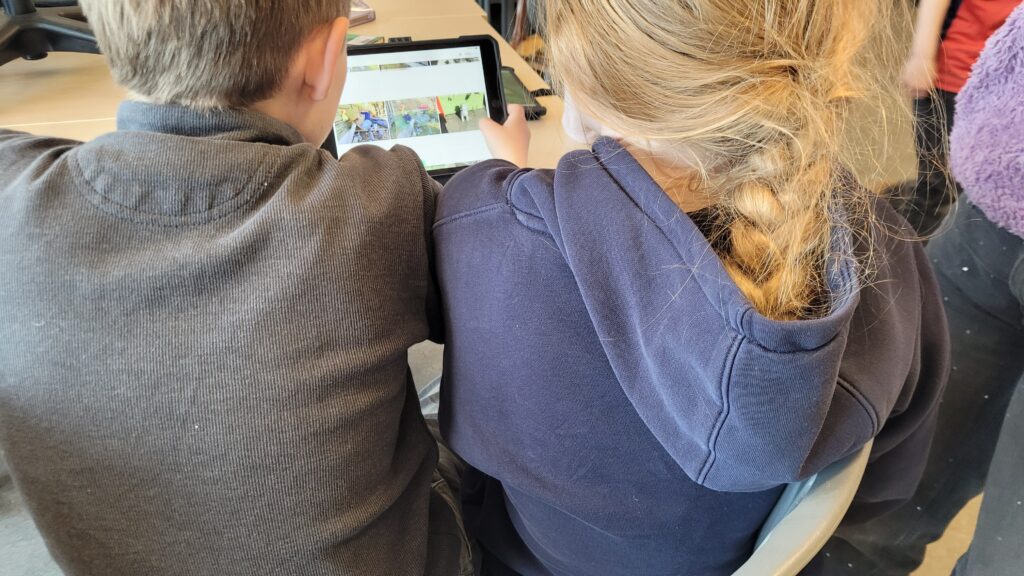
In one workshop, children worked in pairs with iPads, moving through their surroundings in search of things that caught their attention. Rocks, sticks, buildings, animals, other children and small details on the ground all became possible photographic material.
The task encouraged movement and exploration. Children ran around, looked behind corners, bent down to photograph details and repeatedly drew one another’s attention to discoveries. Although they worked primarily in pairs, their exploration was highly social: they watched other groups, became curious about what others had found, showed one another places and images, and influenced each other’s choices.
But the camera did more than document what they encountered. Photographing transformed the encounter itself. A rock was no longer simply a rock: it became an image that could be framed, layered and combined with another image. At the same time, the camera introduced limitations. Some qualities of an object disappeared when it became a photograph, while others suddenly became more visible.
Listening differently
Another workshop began not with looking, but with listening.
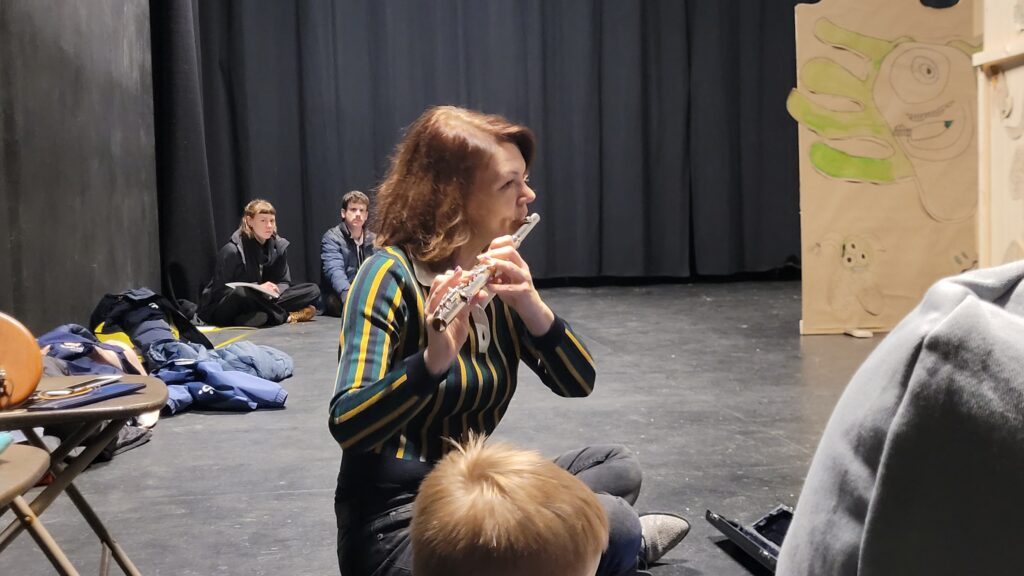
Children were invited to become attentive to the sounds around them. Instead of treating environmental sound as background noise, they listened to it as potential artistic material. Sounds stimulated imagination and subsequently became connected to musical composition, instruments, improvisation and collective singing.
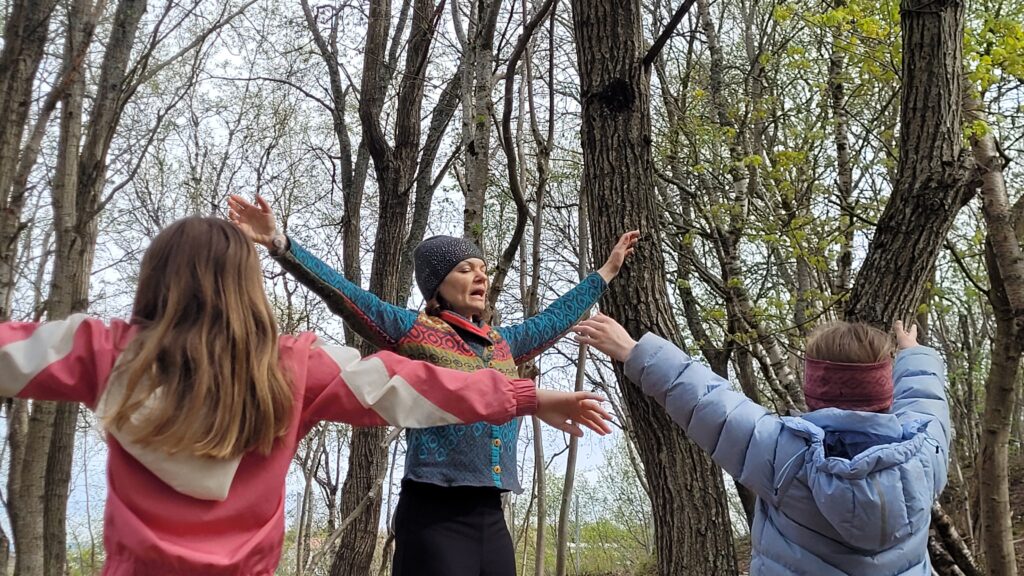
Moving the activity outdoors on the second day changed the experience significantly. In the small forest, birds and other environmental sounds became more present. The children remained outside, listened carefully and contributed their own instruments and improvised sounds to the developing composition.
The workshop moved between very individual experiences of listening and collective acts of music-making. At some moments children turned inward, concentrating on their bodies and what they could hear; at others they sang, improvised and created together.
The distinction between environment and artistic material consequently began to blur.
When workshops begin to meet
One particularly interesting moment occurred when the boundaries between workshops themselves became porous.
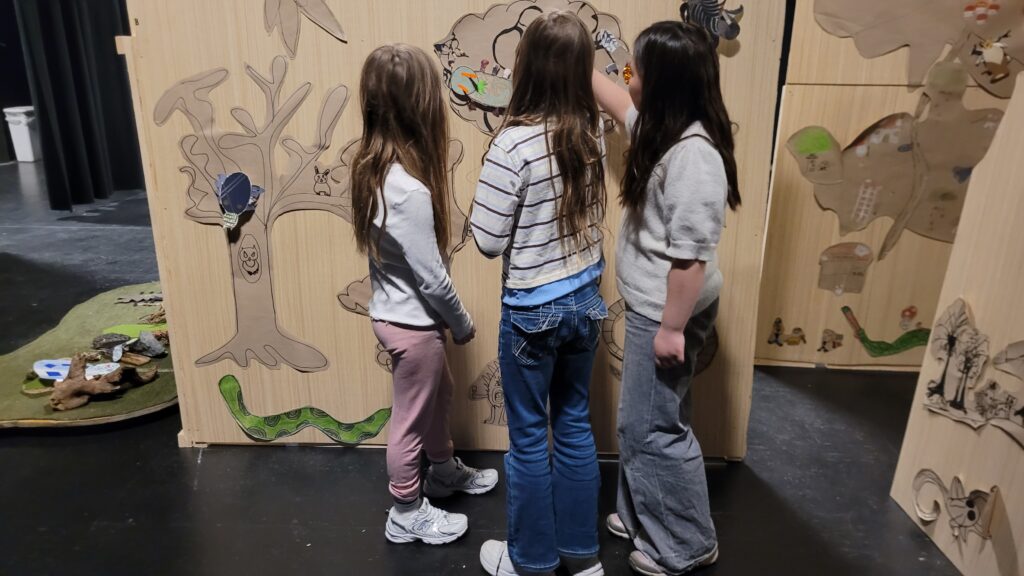
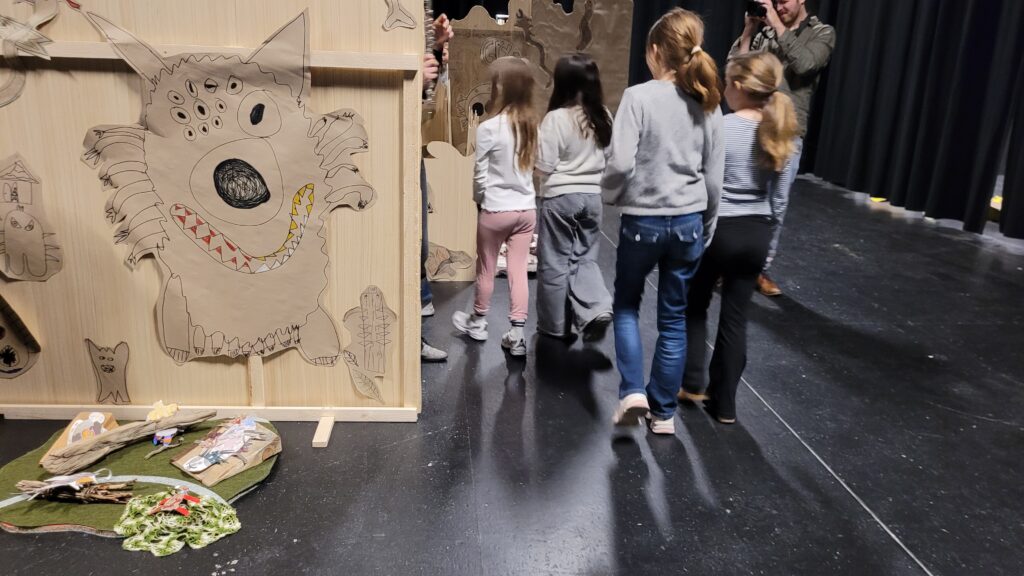
Children from the sound workshop encountered paper insects produced in another ART_ECO activity. They were invited to imagine the sounds these insects might make. A visual and material artefact from one workshop thus became a stimulus for sonic imagination in another.
Paper became insect.
Insect suggested sound.
Sound became imagination.
Imagination became artistic material.
Rather than remaining separate artistic activities, the workshops began to feed into one another.
Not everything goes according to plan
The observations also remind us that artistic encounters are not smooth or completely controllable.
Children sometimes departed from the intended task. In the photography workshop, some became interested in photographing themselves or other children rather than the objects initially suggested. Distinct aesthetic preferences began to emerge in their images. Some groups disagreed about how an image should develop.
The listening workshop produced different forms of resistance. Sustained listening and meditative activity demanded considerable concentration: some children became deeply absorbed, while others struggled to remain still or attentive. One child became frustrated by a repeatedly occurring sound.
These moments matter.
Rather than seeing distraction, disagreement, boredom or deviation only as problems to eliminate, ART-ECO asks what they might tell us about an educational encounter. When does an educator intervene? When is it useful to guide? When should an unexpected direction be allowed to develop?
From Sourcing to Weaving
For ART-ECO, the Trondheim workshops are therefore more than activities to be documented. They are places from which we learn.
We source moments of attention, material transformation, collaboration, resistance, curiosity and pedagogical intervention.
We then begin weaving these observations together.
These are not conclusions from Trondheim. They are threads we can continue to follow.
And perhaps this is precisely what the workshops are teaching us: arts education can create occasions to look again, listen again, and become attentive to relationships with a world that is already there -but that may become different when we encounter it differently.
A shared experience
The Trondheim workshops could only take shape through the openness, curiosity and generous participation of the people who welcomed ART-ECO into their learning environments. We are deeply grateful to our hosts, the participating schools and teachers, and especially to the children who explored, experimented, listened, created and surprised us along the way. Their willingness to engage with the workshops – and sometimes to take them in directions we had not anticipated – is an essential part of what ART-ECO is learning from these encounters.
Many of these moments are easier to encounter visually than to describe in words: children searching for details, moving through their surroundings, listening together, experimenting with materials, sharing discoveries and creating alongside one another. We invite you to explore the photographs from Trondheim and discover some of these moments for yourself.
Explore the Trondheim workshop gallery